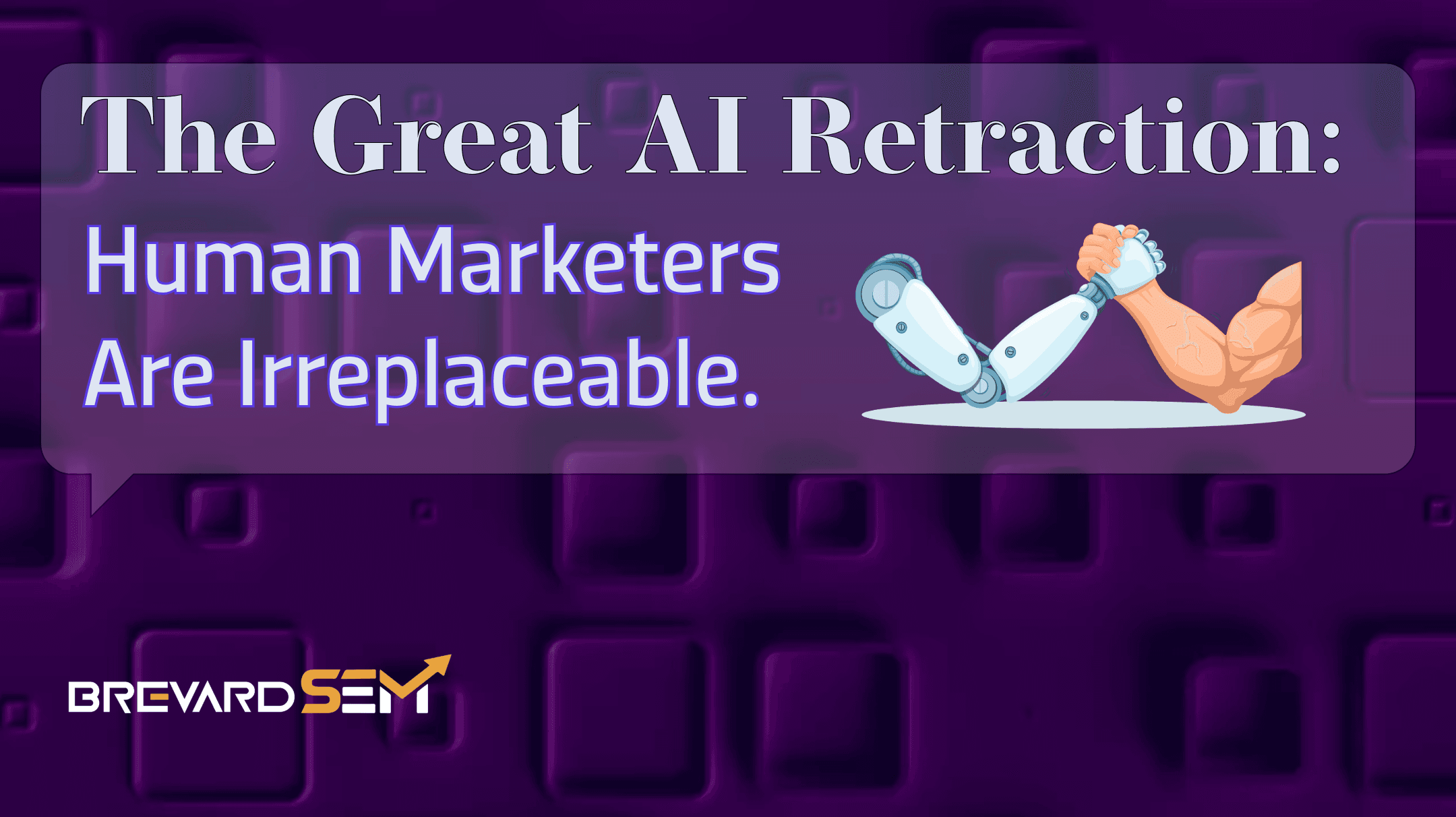
The narrative surrounding the future of white-collar work has undergone a stunning, highly calculated about-face in the upper echelons of Silicon Valley. For the past two years, enterprise leaders, chief marketing officers, and digital media professionals have operated under a cloud of existential anxiety. The prophets of the artificial intelligence boom took turns on global stages to warn that a massive employment collapse was imminent. We were told that generative models would rapidly dismantle knowledge-based industries, with marketing departments and creative teams positioned directly in the crosshairs.
In mid-2025, OpenAI chief executive officer Sam Altman stated bluntly that a lot of jobs would go away and that entire categories of entry-level knowledge work faced immediate elimination. Around the same time, Anthropic leader Dario Amodei went even further, forecasting that up to half of all white-collar positions could dissolve within five years, potentially pushing global unemployment into double digits. These warnings sent shockwaves through corporate boardrooms. Internal marketing departments were downsized, software systems were prematurely automated, and budgets were aggressively reallocated to replace human intuition with machine learning algorithms.
In late May 2026, the script completely flipped. Speaking virtually at the Commonwealth Bank of Australia conference in Sydney, Sam Altman openly walked back those catastrophic predictions. Interviewed by bank executive Matt Comyn, Altman conceded that his early intuitions about a rapid white-collar jobs apocalypse were fundamentally off. He expressed that he was delighted to be wrong, noting that the expected elimination of entry-level white-collar roles simply has not materialized. This rhetorical retreat matches a similar pivot from Dario Amodei, who recently reframed the automation narrative by explaining that when a system automates ninety percent of a task, the remaining ten percent of highly nuanced human oversight naturally expands to encompass one hundred percent of the professional’s focus, multiplying their output tenfold.
As a digital strategist who began managing search engine optimization and digital campaigns back in 2001, and as an engineer who has spent the last five years designing proprietary machine learning systems, this reversal comes as no surprise. The belief that generative artificial intelligence would completely replace human marketing professionals was built on a fundamental misunderstanding of both technology and human behavior. While artificial intelligence is an extraordinary operational utility, it lacks the contextual empathy, psychological depth, and deterministic consistency required to run a successful commercial campaign autonomously. The marketing professionals who understand how to orchestrate these tools are not going away; instead, they are becoming the most valuable assets in the modern corporate landscape.
Decoupling Automation from Elimination in Digital Marketing
To understand why the digital marketing workforce remains completely resilient despite massive advancements in computational power, you must look closely at the mechanics of corporate work. When tech executives look at a job from the outside, they often treat it as a collection of isolated, mechanical tasks. They assume that if an algorithm can draft a headline, write a block of copy, or generate an audience segment, the entire role of the marketer has been solved.
This perspective mistakes execution for strategy. The actual value of a senior digital marketer does not lie in the mechanical act of typing a blog post or clicking buttons inside an ad manager interface. The value lies in the deep comprehension of human psychology, the navigation of shifting cultural sentiments, the alignment of brand safety, and the strategic orchestration of diverse digital channels.

When Dario Amodei points out that automating ninety percent of a job expands the remaining ten percent, he is describing the exact evolution occurring within modern marketing departments. Consider the workflow of a high-level content strategist. In a traditional setting, that professional spent eighty percent of their week conducting manual keyword research, reviewing search layouts, and drafting baseline text. This mechanical burden limited their ability to think deeply about broad market positioning or comprehensive customer journeys.
By shifting that eighty percent of mechanical heavy lifting to a specialized machine learning model, the marketer does not become obsolete. Instead, their capacity is unlocked. They can now dedicate one hundred percent of their energy to the highly critical ten percent of the process: refining the emotional resonance of the message, validating the absolute factual precision of the claims, and ensuring that the brand entity is perfectly positioned to capture user trust. The job has not been eliminated; it has been elevated from low-level execution to high-level system direction.
This structural reality is supported by hard economic data. The Yale Budget Lab, which has tracked the labor market impacts of generative technologies through March 2026, revealed that there have been no significant, permanent changes in the occupational mix or unemployment duration among professions with high exposure to artificial intelligence. While major technology firms like Meta, Amazon, and Intuit have executed high-profile restructurings to shift capital into AI infrastructure, the predicted empty marketing floors have failed to appear. Businesses have discovered that completely removing the human element from customer-facing operations results in a rapid decay of brand authenticity and marketing performance.
The Probabilistic Trap: Why Autonomous AI Fails in Commercial Environments
To understand why a human must always remain in the loop of any enterprise marketing program, you have to examine the underlying mathematical architecture of large language models. As an AI developer, I constantly remind corporate leadership that these systems are fundamentally probabilistic, not deterministic.
A deterministic system is one where a specific input will always yield the exact same, predictable output, much like a calculator adding two numbers together. A probabilistic system operates entirely on statistical guesswork. A large language model does not actually understand the meaning of the words it generates; it simply calculates the mathematical probability of which word should follow the previous word based on the massive datasets it was trained on.
Because randomness and probability are baked directly into the core of the technology, autonomous systems are prone to several distinct vulnerabilities that can devastate a business’s market position if left unmanaged:
1. Model Drift and Algorithmic Decay
When an AI system is left to run in an autonomous loop without constant human course correction, its output begins to degrade over time. This is known as model drift. The system becomes overly reliant on its own statistical patterns, leading to repetitive messaging, generic visual assets, and a complete loss of the distinct voice that differentiates a business from its competitors.
2. Hallucinations and Factual Vulnerabilities
Because these systems are built to prioritize linguistic fluidity over factual truth, they routinely manufacture data points, invent case studies, and state historical or technical inaccuracies with absolute confidence. In a personal conversation, a hallucination is a minor curiosity. In an enterprise digital marketing campaign, an unverified hallucination can result in severe legal liabilities, compliance violations, and the total destruction of brand credibility.
3. Total Loss of Cultural and Contextual Empathy
Marketing is an art entirely dependent on timing, context, and emotional subtlety. A message that resonates perfectly on a Tuesday morning might become deeply offensive or tonally tone-deaf by Wednesday afternoon due to an unexpected global event or a shift in public sentiment. A machine learning model possesses zero real-world awareness or genuine empathy. It cannot feel the room, read the news, or comprehend the subtle emotional undercurrents of a local community.
During his virtual interview in Sydney, Sam Altman highlighted this exact limitation through a personal anecdote. He shared that he had attempted to outsource his own communication by using an AI agent to respond to his Slack and email messages under the label of Sam’s AI. Ultimately, he abandoned the experiment and reverted to handling the communication himself. Altman observed that this trial served as an amazing reminder of how deeply we care about genuine human interactions, concluding that he could not imagine himself outsourcing that personal connectivity to an AI anytime soon.
If the chief executive of OpenAI cannot trust an autonomous model to manage his internal messaging, an enterprise business certainly cannot trust an autonomous model to manage its relationship with its customer base. The human marketer serves as the necessary deterministic filter, standing between the probabilistic output of the machine and the real-world sensibilities of the consumer marketplace.
Marxi.ai and the Architecture of Human Amplification
When we began developing Marxi.ai five years ago, we did not set out to build an automated engine designed to replace copywriters, search specialists, or creative directors. We saw through the Silicon Valley hype cycles and recognized that the true power of machine learning lies not in human replacement, but in human amplification. Marxi was engineered from the ground up to serve as a cognitive partner that optimizes workflow efficiency while strictly maintaining the human in the loop methodology.

Marxi.ai acts as an advanced data-processing layer that eliminates the friction of modern digital marketing execution. Instead of forcing a human strategist to spend days manually analyzing thousands of search engine results pages, auditing competitor code, or parsing disparate analytics streams, Marxi executes these calculations in real time. It uncovers hidden semantic opportunities, highlights structural vulnerabilities in competitor knowledge graphs, and generates highly targeted baseline frameworks based on twenty years of historical marketing performance data.
The system does not publish the campaign, deploy the ad spend, or finalize the strategy autonomously. Instead, it hands these refined, high-level insights directly to our senior marketing professionals. This integration changes the nature of the marketer’s day-to-day workflow in several profound ways:
- Unprecedented Knowledge Depth: Marxi provides our strategists with an instant, birds-eye view of an industry’s digital ecosystem, allowing them to make decisions based on comprehensive vector data rather than guesswork.
- Accelerated Speed to Market: By automating the initial structural drafts and technical code setups, our creative teams can move from strategic conception to live deployment in a fraction of the traditional time.
- Flawless Execution Accuracy: Marxi checks for structural data alignment, ensures local schema precision, and verifies entity connections, giving the human marketer a technical safety net that guarantees the campaign matches the strict requirements of modern search and AI models.
By pairing advanced machine learning with veteran human execution, we create a closed-loop system where efficiency and accuracy coexist. The professional is never cut out of the process; instead, they are placed firmly in the driver’s seat, using the technology to steer enterprise growth with absolute precision.
The New Frontier: Skills Every Future-Proof Marketer Must Master
Because the mechanical aspects of digital execution are being rapidly absorbed by systems like Marxi.ai, the skillsets required to excel as a marketing professional are shifting dramatically. The professionals who resist this shift and cling to old-school, manual execution methods will find themselves falling behind. The marketers who embrace this evolution and re-skill around the management of these advanced tools will command the future of the industry.
To remain completely indispensable, the modern digital marketer must master three primary pillars of the new digital architecture.
1. Prompt Engineering and Analytical Orchestration
The ability to communicate effectively with a machine learning model is quickly becoming as valuable as the ability to write code. Marketers must learn how to construct highly detailed prompts, feed models the correct behavioral data, and establish strict contextual boundaries. You must know how to act as an analytical conductor, taking the outputs of multiple distinct specialized models and synthesizing them into a single, cohesive brand strategy.
2. Data Validation and Fact-Checking Rigor
As the web becomes increasingly flooded with generic, AI-generated content, accuracy and original research will become the ultimate differentiators of quality. Future-proof marketers must develop deep journalistic skills. They must know how to audit machine-generated copy, track down original source data, verify legal and regulatory compliance, and eliminate any trace of algorithmic hallucination. Your job is to ensure that every word published under your company’s banner is completely bulletproof.
3. Entity Alignment and Answer Engine Optimization (AEO)
Traditional keyword optimization is rapidly giving way to entity-driven strategy. Marketers must learn how to view the web through the lens of semantic networks. This requires an understanding of how to build comprehensive knowledge graphs around a business entity, deploy advanced JSON-LD schema architectures, and generate authentic digital citations across independent media channels. The modern goal is not just to rank on a standard list of links, but to ensure that your business is the precise entity that language models select and quote when answering high-intent conversational queries.
Common Questions:
Why did tech leaders like Sam Altman walk back their predictions about an AI jobs apocalypse?
Tech leaders initially overestimated the speed and ease with which complex, human-centric roles could be completely automated. Over the past few years, as organizations attempted to implement fully autonomous systems, they discovered major technical limitations, including model drift, unpredictable hallucinations, and a total lack of cultural and contextual empathy. Furthermore, as Sam Altman noted at the Commonwealth Bank of Australia conference, there is an irreplaceable human element to employment; clients and consumers care deeply about human interaction and oversight, making total automation commercially unviable.
What does human-in-the-loop mean in digital marketing?
Human-in-the-loop is a operational methodology where artificial intelligence systems handle massive data processing, pattern recognition, and initial execution tasks, while a human professional maintains ultimate control over the strategy, creative direction, factual verification, and brand safety. This approach ensures that the marketing output benefits from the speed of machine processing while retaining the essential empathy, accuracy, and nuanced judgment of a human expert.
How does Marxi.ai differ from standard, fully automated AI writing tools?
Standard automated tools are designed to completely bypass human involvement, often producing generic, repetitive, and historically inaccurate content that fails to rank or convert. Marxi.ai was engineered specifically as an amplification engine for senior professionals. It processes complex vector spaces, audits competitor data, and sets up advanced technical frameworks, then delivers those insights to experienced marketers who refine the creative messaging and validate the strategic alignment.
Will entry-level digital marketing roles be eliminated by AI?
No, but entry-level roles are changing fundamentally. Instead of spending hours manually executing repetitive tasks like basic copy formatting, simple keyword list building, or manual link tracking, entry-level professionals are now using AI tools to handle those tasks instantly. This allows them to focus their energy on learning prompt architecture, data validation, strategic execution, and advanced search engine dynamics early in their careers.
How can a business ensure its marketing strategy is protected from AI inaccuracies?
The only way to protect your brand from algorithmic errors and legal liabilities is to embed a veteran digital marketing professional into every stage of your technological workflow. Never allow an AI model to publish content, deploy advertising budgets, or alter your website’s codebase autonomously. Every piece of data, code, and copy must be audited, verified, and approved by a human gatekeeper who understands your brand guidelines and regulatory requirements.
About the Author
Zach Aharon is the founder of Brevard SEM and Marxi.ai. He entered the digital media space in 2001, developing early search acquisition models and scalable enterprise strategies during the foundational years of the modern web. Over the past twenty-five years, Zach has led advanced marketing, analytics, and technical development programs for mid-market corporations and national brands. In 2021, he established Brevard SEM in Melbourne, Florida, to deliver high-level technical engineering and search strategy to scaling organizations.
With a deep background that spans both veteran digital marketing execution and five years of custom artificial intelligence system development, Zach created Marxi.ai to bridge the gap between human intuition and machine efficiency. His dual experience allows him to build comprehensive enterprise strategies that perfectly align with the data demands of advanced language models while strictly preserving the authentic human connection that drives real-world consumer conversions.
Empower Your Marketing Team for the Next Generation of Search
The recent rhetorical shifts from Silicon Valley confirm what we have always practiced at Brevard SEM: technology is nothing without human mastery. The businesses that rush to completely automate their marketing operations are quietly destroying their brand authority, losing their unique market voice, and exposing themselves to severe operational risks. The future belongs to those who use advanced artificial intelligence to amplify human talent, not replace it.
To keep your business at the forefront of this digital evolution, you need a partner who understands the deep technical architecture of machine learning models and possesses decades of real-world marketing experience.
Brevard SEM has the technical senior team, the engineering capability, and the proprietary systems required to design a human-driven, AI-accelerated growth strategy for your brand. Contact Brevard SEM today to schedule an executive strategy session and discover how to optimize your digital marketing department for the future of search and generative discovery.